sodai.jp — municipal bulk-waste reservations
A cloud reservation platform we build and operate for Japanese city governments — replacing telephone-only bulk-waste booking with 24/7 online reservations and one unified back office.
- Product
- sodai.jp — bulk-waste reservation platform
- Municipalities
- Kashiwa (Chiba), Akishima (Tokyo), Kiyosu (Aichi), Kikuyo (Kumamoto)
- Our role
- Product development & ongoing operation
- Security
- ISO 27001:2022 · JIS X 8341-3:2016 Level AA
- Status
- Live
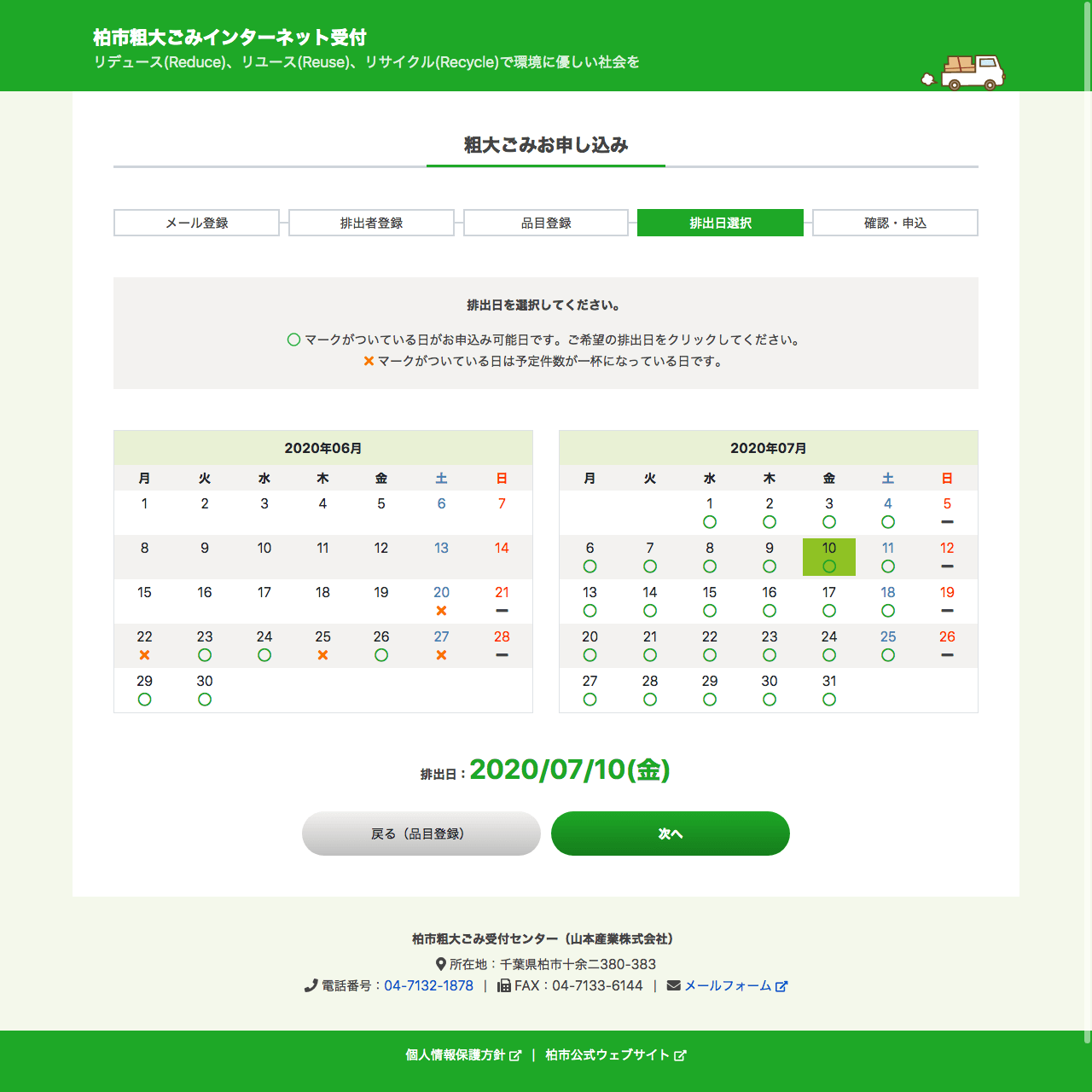
Booking a bulk-waste (粗大ごみ) collection used to mean a phone call during office hours. sodai.jp turns it into a 24/7 online reservation — and gives the municipality a single dashboard for bookings, routes, and reporting. We develop it, operate it, and hold it to government procurement standards.
The challenge
For many city governments, bulk-waste booking was telephone-only. That concentrated call volume into peak periods, left residents unable to book outside office hours, and forced staff to aggregate and reconcile data by hand — slow to turn around and easy to get wrong.
What we built
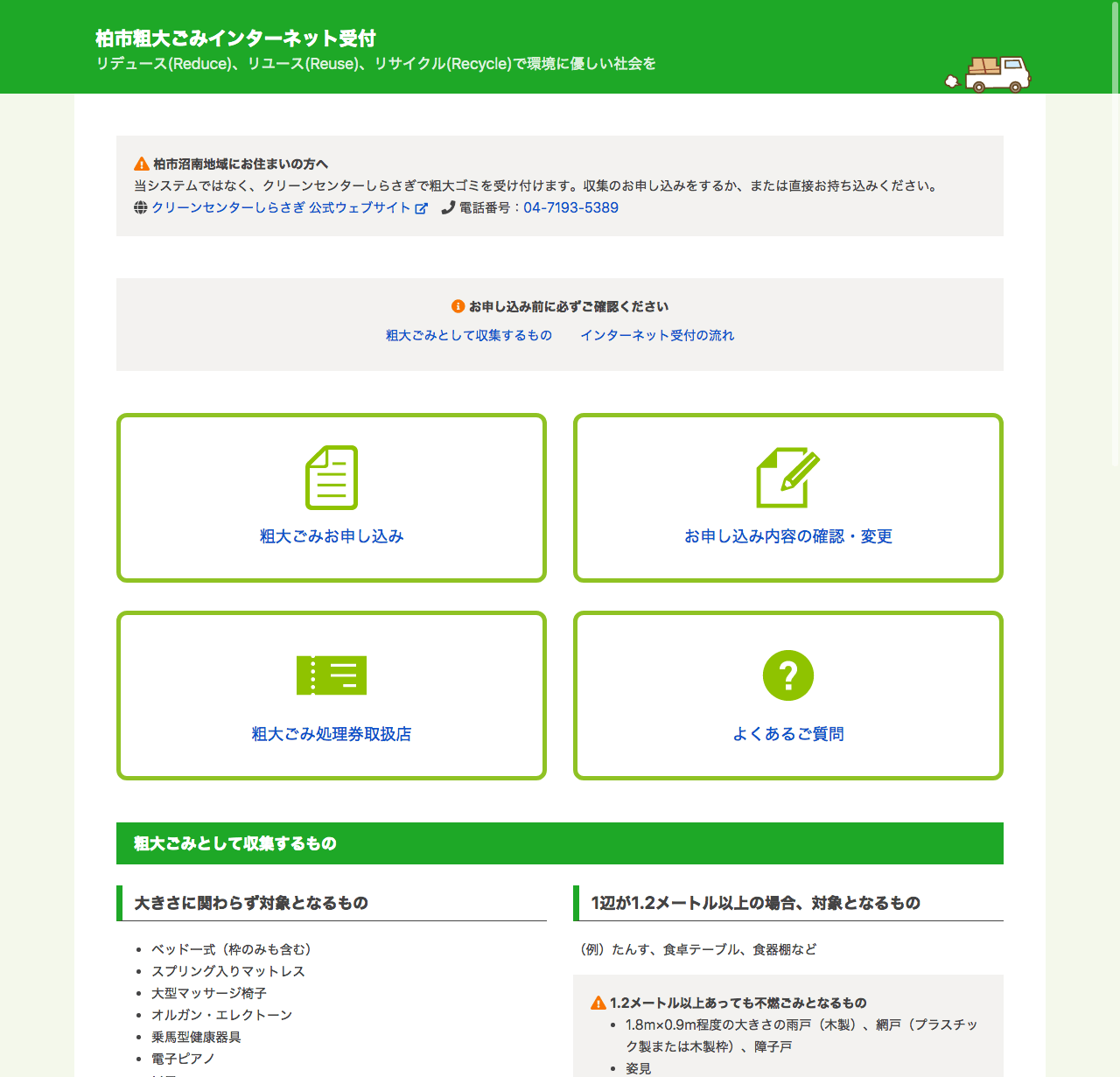
sodai.jp is a browser-based platform residents and staff use from any device — no install, no special hardware.
- 24/7 reservations by web, phone, and LINE — residents book on their own schedule
- Real-time route mapping and vehicle allocation for collection days
- CSV export and automated report generation — no more manual aggregation
- Tablet-based field operations for collection crews
- Optional cashless payment (credit card, PayPay) and detailed Zenrin maps
Results
Adopted by multiple Japanese municipalities across several prefectures — Kashiwa in Chiba, Akishima in Tokyo, Kiyosu in Aichi, and Kikuyo in Kumamoto — each with its own intake and payment configuration.
Built to government standards
Public infrastructure is held to a higher bar, and sodai.jp is built to meet it: ISO 27001:2022 information-security certification, JIS X 8341-3:2016 Level AA accessibility, TLS encryption, intrusion detection, access restrictions, and automated backups and updates.
This is the same discipline a foreign subsidiary's Japan systems benefit from — the team that runs public-sector platforms is the team that runs your site.